People assume solid wood must be the “real” choice and engineered is some kind of compromise. It isn’t that simple, and once you understand how each is actually built, the decision gets a lot easier.
At Naos, we’ve spent more than 20 years helping homeowners, architects and interior designers choose the right wood flooring for their homes. Both are beautiful. The right one for you comes down to your subfloor, your heating system and how much movement your home naturally goes through with the seasons.

What’s actually different between the two?
Real wood flooring, or solid wood, is exactly what it says – one piece of timber, machined and finished, right through. Nothing engineered about it. It’s been used in homes for generations and there’s a real pleasure in a floor that is, quite literally, solid oak from top to bottom.
Engineered wood flooring is a real hardwood top layer bonded onto a timber base beneath. Done well, it looks identical to solid wood – same grain, same knots, same character – but the construction underneath is what gives it the edge in a modern home.
Why does the construction matter so much?
Wood moves. All of it, solid or engineered, expands and contracts a little with temperature and humidity – that’s just timber. The question is how much, and how predictably.
With solid wood, the whole plank is one material, so it moves as one material does, which, depending on species and width, can be quite a lot. That’s why solid wood is happiest in rooms with fairly stableconditions, and less happy in kitchens, or anywhere near underfloor heating.
Engineered flooring is built to fight that movement. A good board has a top layer bonded to a base built from layers with the grain running in alternate directions, so any expansion in one layer is opposed by the layer beneath. Get the quality control right (there is real variation between manufacturers here!) and you end up with a floor that’s dramatically more stable than solid wood, without looking any different. Stability is actually all about the quality of the board construction, balancing the moisture content in the different layers and ensuring that level is low enough for use with UFH. The UFH will mean the moisture content will inevitably end up at about 7% so not much good if it starts at 15%… plenty do! Get the good stuff.
Does it matter for underfloor heating?
Yes, quite a lot.
Underfloor heating drives moisture out of a wood floor, and there’s a limit to how much heat you can put through timber before it starts to move, typically the subfloor shouldn’t be run above around 28°C.
Solid wood can technically be used over UFH but it’s a harder job to get right and the margin for error is small. Engineered flooring, with its more stable core, copes with those temperature swings far more comfortably, which is why we’d steer most kitchens, dining areas and open-plan spaces towards it.
What about how they look?
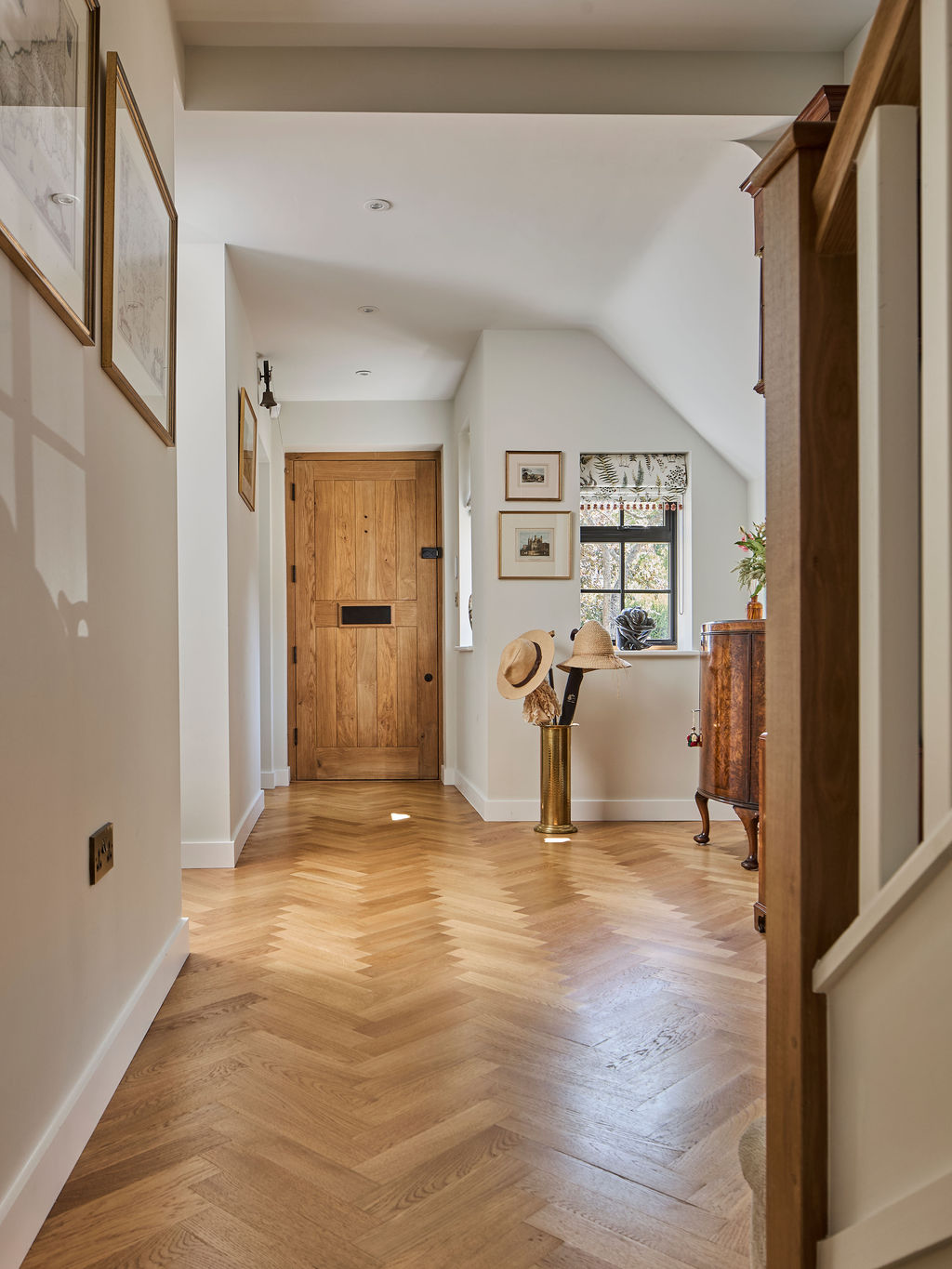
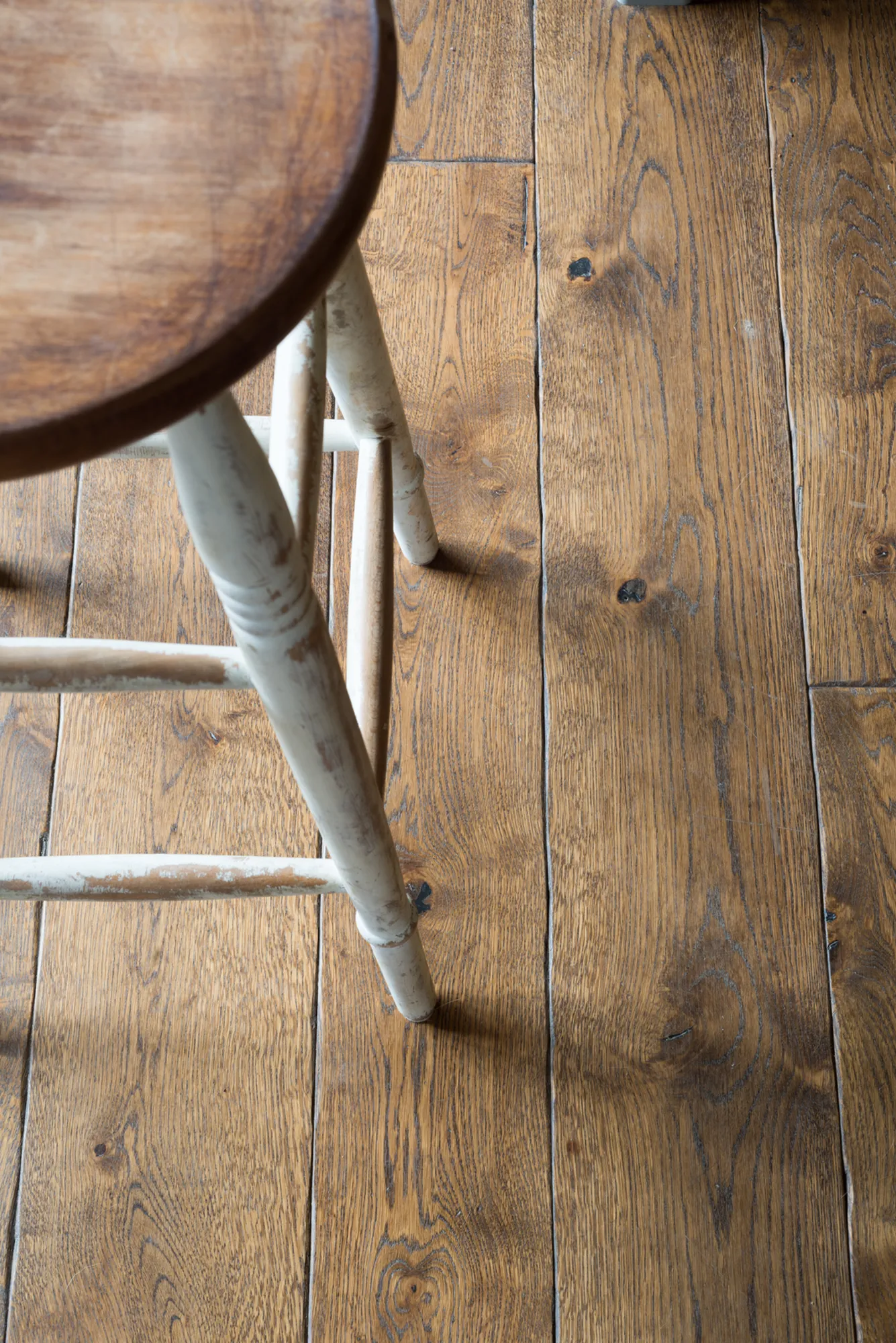
Honestly? Very little difference, if you’re buying quality. A good engineered board uses a real oak wear layer, so the grain, the knots, the colour variation – all of that is genuine timber, not a photograph of it. Having said that, perhaps the exception is if you’re looking for a very rustic board where you might like to have unfilled knots, you’ll only find this in a solid oak plank. All the engineered planks have resin filled knots. In order to address this requirement in engineered products, we actually antique our own boards and this involves partially removing that resin to create a depression in the knot as well as other antiquing work, so you can have a very rustic aged, engineered plank.
Professional installation makes all the difference
It is not what you know, it’s what you don’t know that causes the problems. Subfloor preparation, moisture testing, understanding how the floor needs to expand at the edges, knowing how a UFH system should be set up underneath it – these all matter more than which type of wood you choose.
Naos provides a complete service: helping you choose the right flooring, professional fitting, project management and aftercare, so whichever you go for, it’s done properly and guaranteed.
Visit the Naos showroom
The only real way to compare solid and engineered is to stand on both. Our Tonbridge showroom has a wide range of each, laid out so you can see, and feel, the difference for yourself.
Come in any time, though it’s worth dropping us a call or an email first so someone’s free to talk you through it properly.