At Naos, we’ve spent more than 20 years helping homeowners, interior designers and developers choose the right engineered wood flooring.
What is engineered Oak flooring?
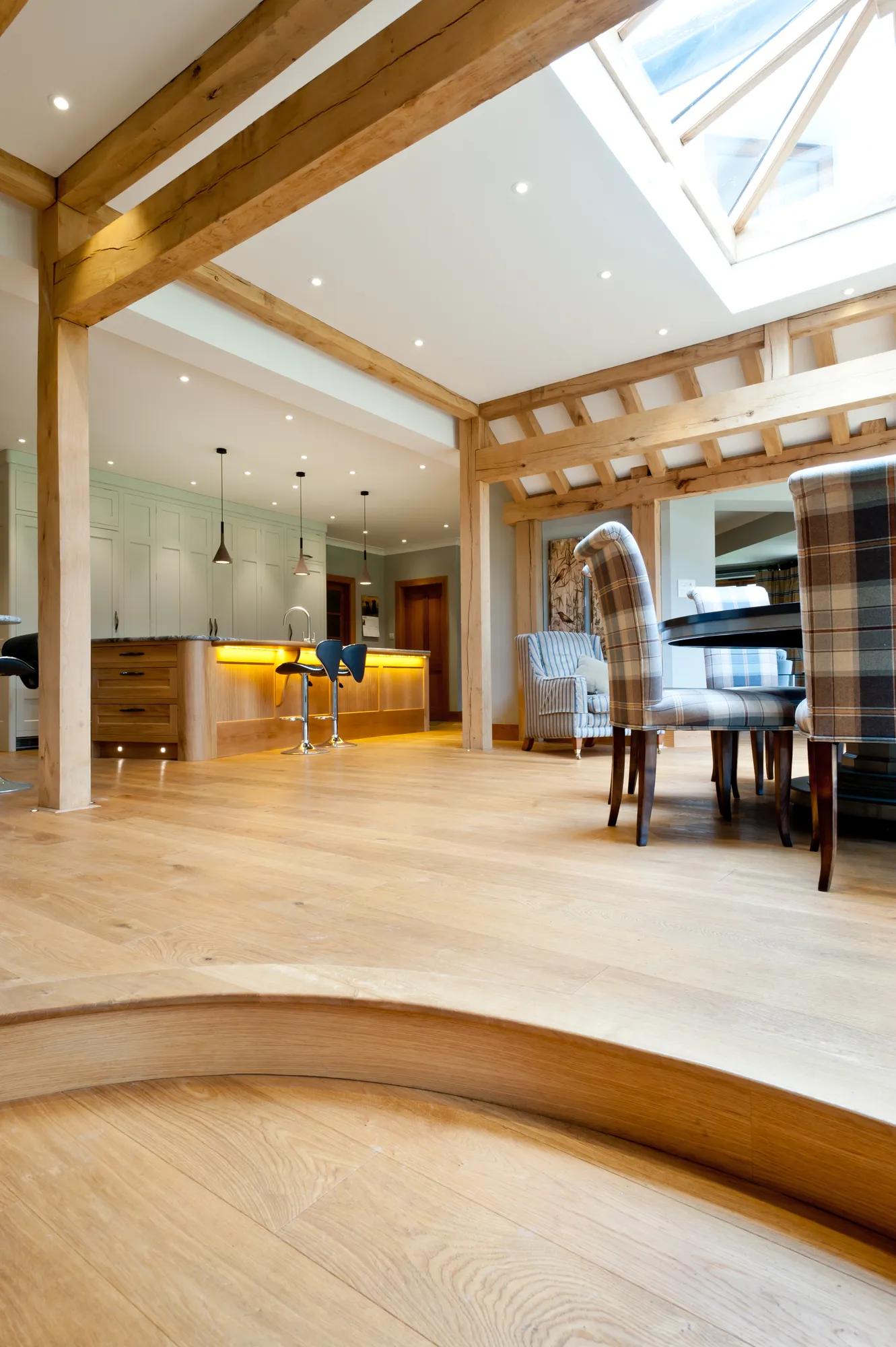
Unlike solid wood flooring, engineered oak flooring is made with a real oak top layer over a stable timber core. You still get the natural look and feel of oak, but with added stability, so the floor is less likely to move with changes in temperature and humidity.
The most important thing!
The single most important thing when choosing engineered planks is the quality control when the board is being manufactured. Stability is achieved by minimising the movement of the boards and very importantly this is a function of the layers of the engineered planks having:
- A low level of humidity – especially where they will be laid on underfloor heating.
- The different layers in the construction need to have the same level of humidity.
If you lay a floor on UFH the moisture content after a year or so will be about 7% in the winter and will go up a bit in the summer when humidity is higher. If you start with levels that are too high (and there are plenty of products on the market where levels are too high) then these planks will shrink. If the layers themselves have different levels of moisture AND they are too high then they will shrink differentially and this can lead to debonding of the upper layer.
How do I know one board from another?
Broadly there are two types of engineered flooring construction. The Northern European / Scandinavian tradition is a 3 layer construction. The top and bottom layers have their grain oriented in the same direction. The middle core layer is at 90 degrees to the top and bottom. These boards are “balanced” as the potential movement in the upper and lower layers is opposed by the thicker layer in the middle. We are fans of Admonter boards from Austria for this reason. Each layer is reliably 7-9% Relative Humidity.
The second type of board has an Oak wear layer glued to a plywood base. The ply is the stable layer, but all ply is not the same. Cheaper products use poor quality ply, the moisture content of which varies a lot. It is actually quite difficult to kiln dry plywood to a reliable level. Good quality control is needed. The better ply boards use 11 layer Birch ply. This is still not as stable as the 3 layer construction but is pretty good and we use these products ourselves as well. The good stuff doesn’t cost much less than the 3 layer stuff, the poor stuff cost a lot less but you shouldn’t be using it… we don’t!
Choosing the right plank width
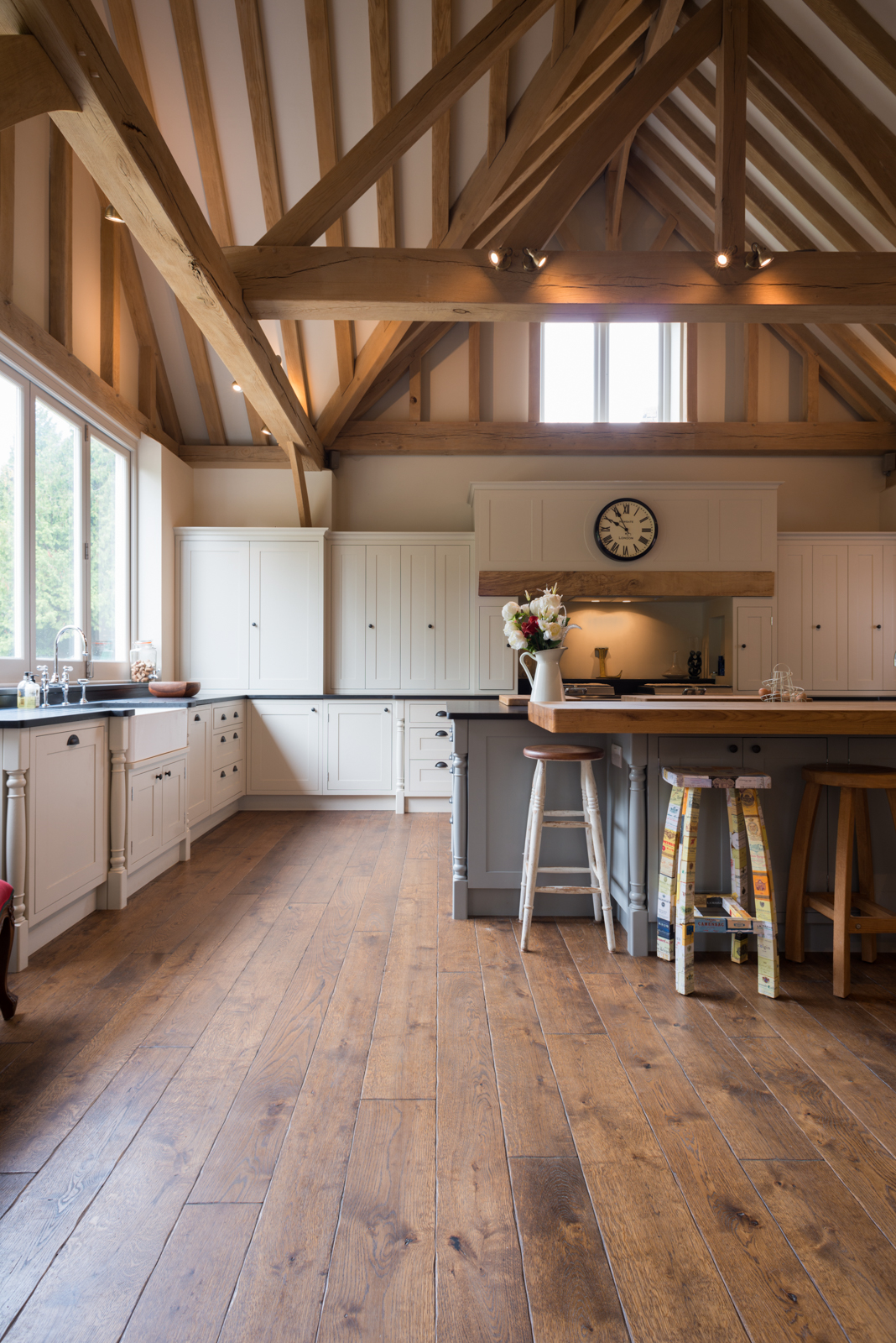
People are attracted to wide planks. Wide planks are impressive, especially in longer lengths and we do offer these. For larger areas they look good in either character grades or cleaner grades for more contemporary spaces. Modestly wide planks, for example 220mm, can definitely be used and don’t look out of place in relatively small rooms, a bedroom for example. One thing that is important is that wide short boards don’t look good, wider boards should be a reasonable length.
Do consider narrower boards though – they actually look really good, and if you like a bit of character the effect of the variation in the wood is multiplied by having more planks in any room. They look particularly good in long lengths.
Choose your grade; there is no benefit to one or the other but make sure you understand what you are getting. Rustic grades can include very big knots and splits. Cleaner grades can be completely clean or include small knots. And of course there is middle ground with a modest amount of knots. Where you find knots you will also find greater variation in the shading of your wood.
Which finish is right for your home?
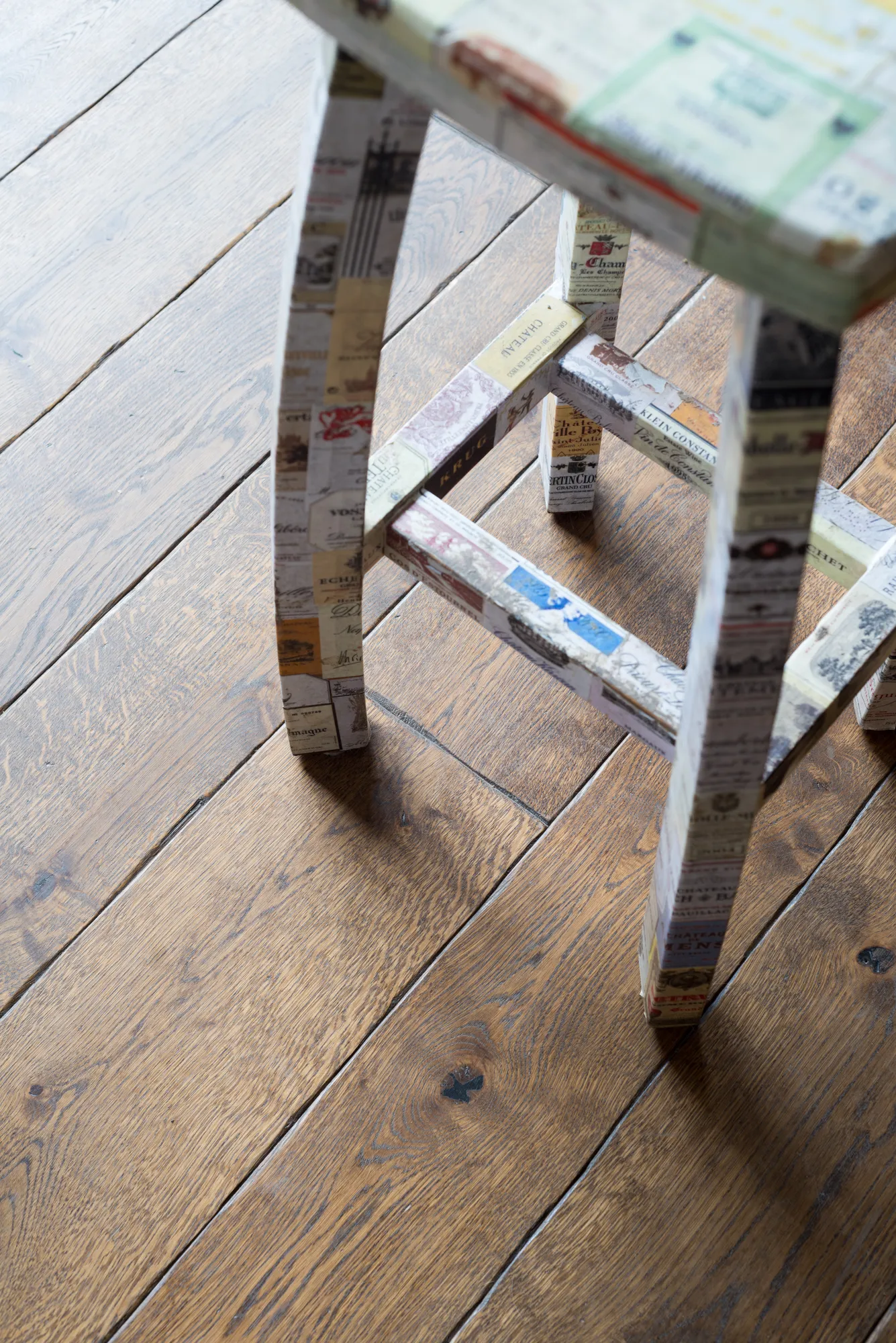
At Naos, we generally favour natural hardwax oiled finishes over lacquered finishes for engineered oak flooring. A natural oil soaks into the timber rather than sitting as a hard layer on top, helping the Oak retain a more natural look and feel while allowing the grain and character of the wood to come through.
Some of the lacquers are very hard and where maintenance is going to be lacking; for example “rentals” or places in constant use they may be worth considering. But unlike hardwax finishes they are harder to repair isolated damage and when it comes to refurbishment you have to sand the whole floor and refinish it. Damage often occurs on brand new floors as there is ongoing works, furniture being moved etc. These repairs can be done to a very high standard with oiled floors if you have some handy people on your team (we do!), it is more difficult with lacquers.
Does engineered Oak flooring work with underfloor heating?
Yes it does.
And in a well insulated building UFH can be used as the sole source of heat. The heat loss of the building is important because there is a limit to the heat you can put through the floor. This is typically 28 degrees Celsius. You don’t want a floor that is at 28 degrees actually, it is too warm and if the heat loss of the building requires this level of heat in the floor you probably shouldn’t use wood. Where the characteristics of the building are suitable and wood is to be used, a probe should be included at subfloor level in the UFH design to make sure the temperature never rises above this limit. We said we liked oiled or waxed surfaces, these are microporous, because the UFH drives humidity out of planks it is important to use the natural soap cleaners to maintain them. The temperature should be set as low as it can be whilst heating the room.
Naos can recommend suitable products and advise on professional fitting so your flooring and heating system work well together.
Professional installation makes all the difference
It is not what you know, it is what you don’t know that will get you into trouble. Method of fitting needs to be assessed, subfloor preparation is essential, moisture testing is essential, understanding how surface damp proof membranes work, being equipped to remove old adhesives or problematic surfaces, for example bitumen or thermoplastic tile, understanding expansion… these are all requirements.
Naos provides a complete service, from helping you choose the right flooring through to professional fitting, project management and aftercare.
Visit the Naos showroom
Come and see wood floors in the flesh. We have lots of displays and sample panels and there is plenty to talk about.
You are welcome any time but on the other hand it is useful to know when people are coming so give us a call or an email with a time that suits.